Compact Filter with Carbon Stage
A straw-style filter with an ultrafiltration core and a carbon stage you can open up and service.
Made by Miniwell (model L605). Sold and supported by Tarnwell.
Compact Filter with Carbon Stage
$58.95
Estimated delivery: Nov 30 – Dec 7 if ordered today
Ships from the USA. That is 4–9 business days including handling. Tracking is emailed when it ships. Shipping details
30-day returns on unused filters. Returns & refunds
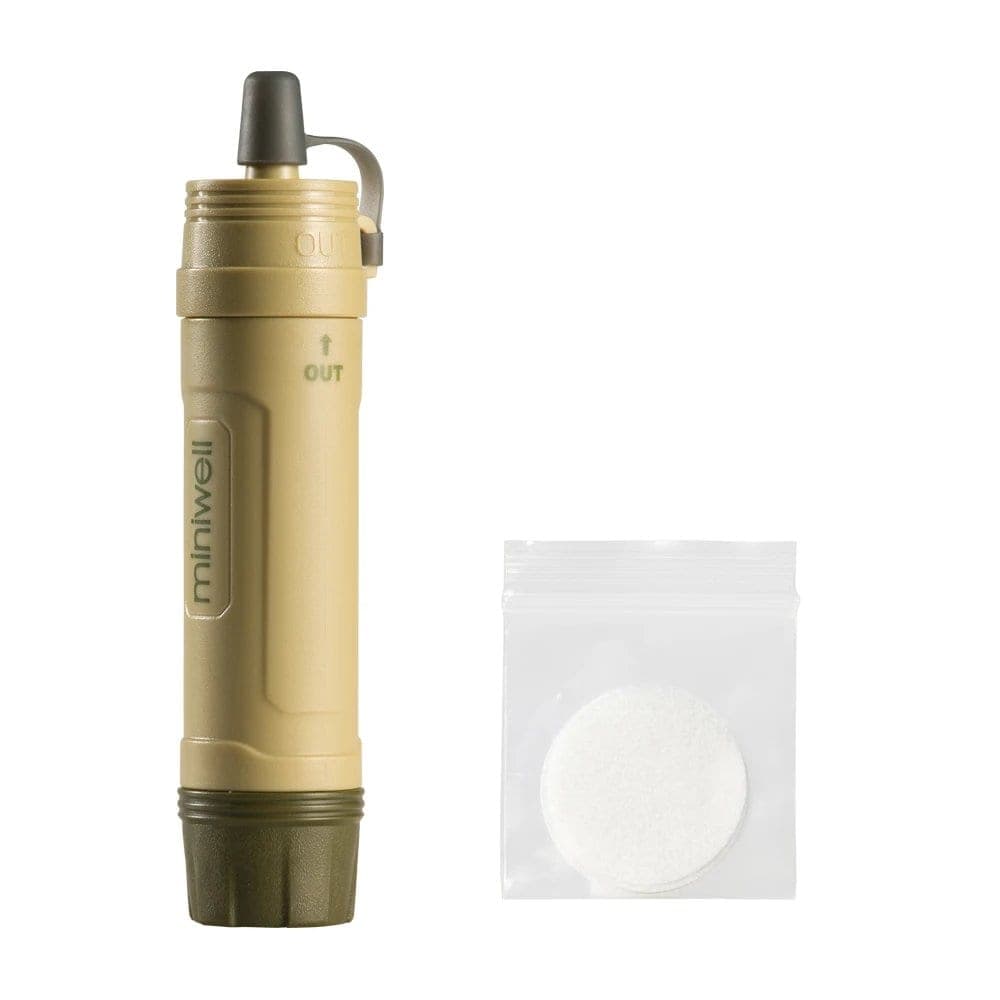
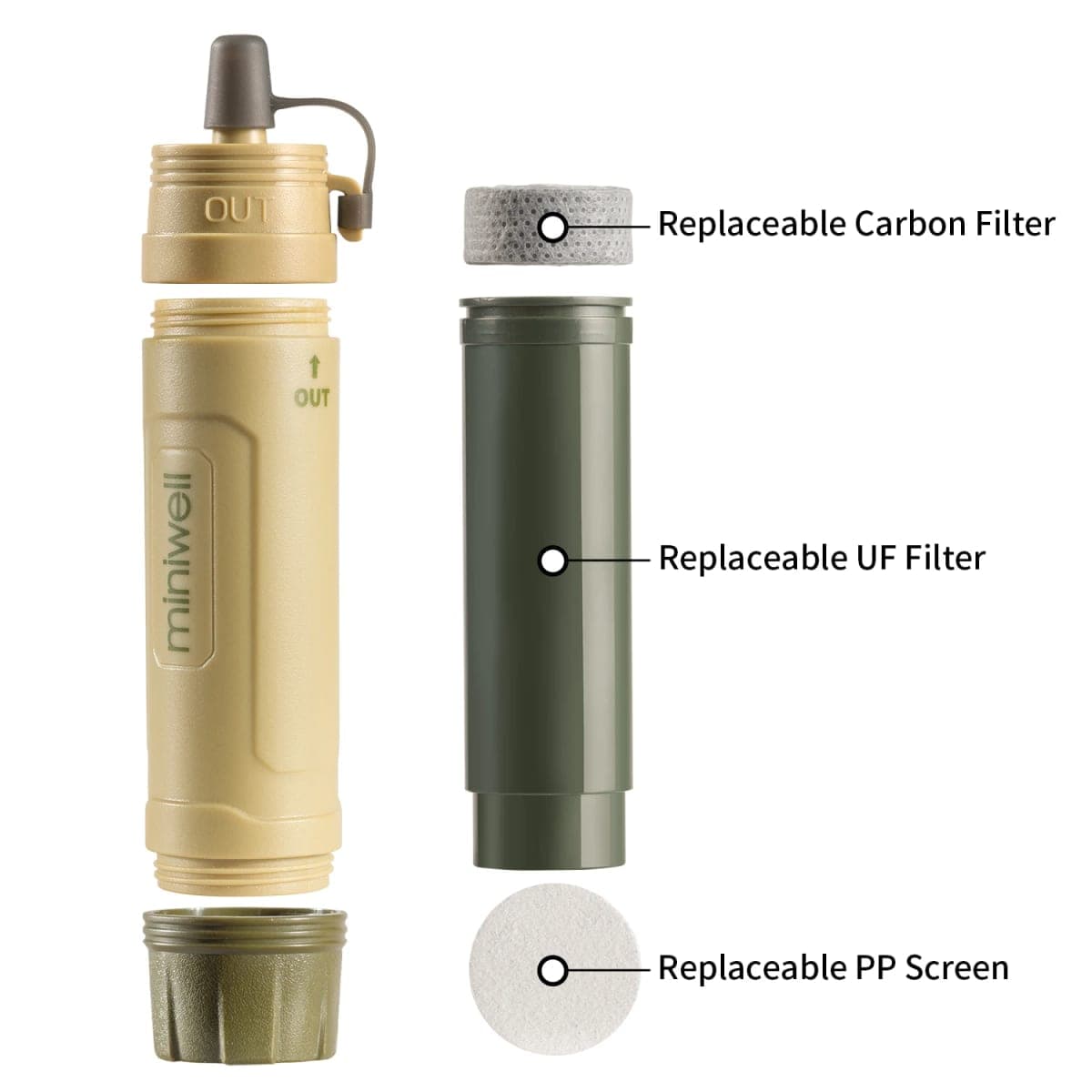
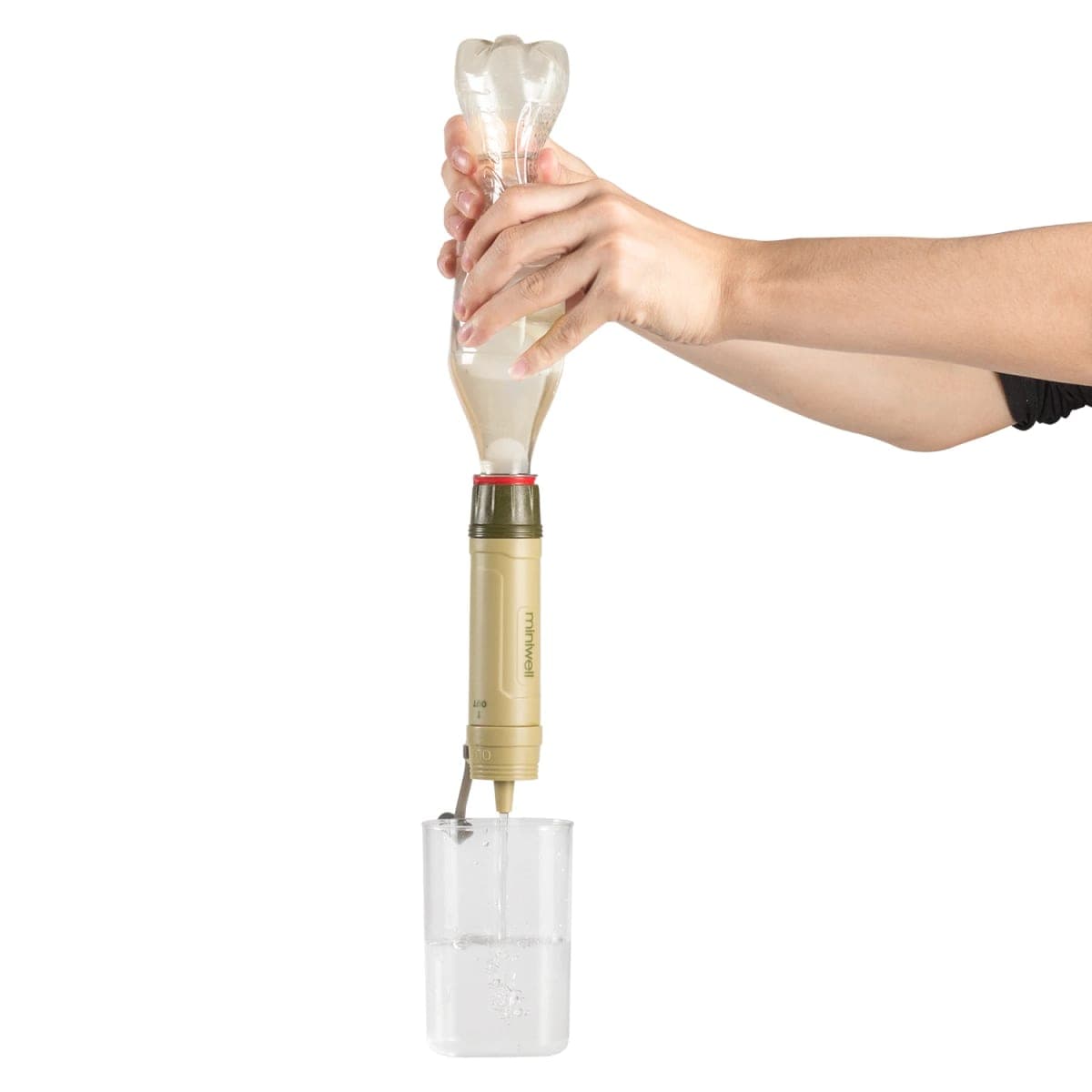
The Miniwell L605 is a slim, tan straw-style filter that comes apart: a pre-screen at the inlet, an ultrafiltration membrane cartridge in the middle and an activated-carbon stage near the mouthpiece. The manufacturer says the carbon stage improves taste and odor. Drink through it at the source or screw it onto a standard 28 mm soda bottle; both ends are threaded. A spare pre-screen comes in the box. We publish a specification or reduction figure only after we hold the supplier's test report or spec sheet for it.
Read before you use it
- This is a water filter, not a purifier.
- It does not remove viruses, dissolved chemicals, heavy metals, or salt. Do not use it with salt water.
- Always start with the clearest water available; pre-filter cloudy water through a cloth.
- Do not let the filter freeze once it has been used. Frozen membranes can crack without any visible sign; replace a filter you think has frozen.
- Replace the filter when it reaches its rated capacity, or sooner if flow stops recovering after backflushing.
Specifications
We only publish a figure once we hold the supplier's test report or spec sheet for it.
| Pore size | Not published yet: awaiting the supplier's documentation |
|---|---|
| Rated capacity | Not published yet: awaiting the supplier's documentation |
| Weight | Not published yet: awaiting the supplier's documentation |
| Flow rate | Not published yet: awaiting the supplier's documentation |
| Operating temperature | Not published yet: awaiting the supplier's documentation |
What it filters
Hollow-fiber membranes like this one are designed to catch sediment, bacteria and protozoa. We publish reduction figures only once the supplier's lab report is on file, and we don't have it yet for this product.
What it does not filter
- Viruses
- Dissolved chemicals such as pesticides, fuel or industrial runoff — don't rely on it for these
- Heavy metals such as lead or arsenic
- Salt — never use it with sea water or brackish water
For water that may carry viruses, such as near human or livestock waste, also disinfect it: boil it, or use a chemical treatment as its label directs. Filter vs. purifier explained
How to use it
- Remove the caps. Before first use, soak the filter in clean water for about a minute so the membrane wets out.
- As a straw: put the inlet end (the end without the mouthpiece) into the water, keep the mouthpiece clear of the source, and sip steadily.
- On a bottle: fill a 28 mm-thread soda bottle from the source, screw the filter's inlet onto it, and squeeze or sip through the mouthpiece.
- Choose the clearest water available. Let silty water settle first, and change the pre-screen when it looks clogged.
Backflushing and maintenance
- Backflush whenever flow slows: screw a bottle of already-filtered water onto the outlet end and squeeze it backwards through the filter. Never backflush with unfiltered water.
- Rinse the pre-screen, and swap in the spare when it stays dirty.
- Don't use soap, bleach or boiling water on the membrane cartridge.
- Shake out excess water and let it air-dry with the caps off.
Storage
Unused filters keep best sealed in their original packaging in a cool, dry place away from direct sun. After use: backflush with clean filtered water, shake out as much water as you can, and let it air-dry with the caps off before storing. Keep a used filter from freezing — in cold weather carry it in an inside pocket by day and keep it in your sleeping bag at night.
When to replace it
Replace it when it reaches its rated capacity, when flow no longer recovers after backflushing, if it may have frozen after first use, or if the housing is cracked. The membrane and housing are mixed plastics that curbside recycling usually won't take; check your local rules, otherwise dispose of it with household trash.
Reviews
No reviews yet. Reviews here come only from verified buyers: after delivery we email each customer a link to review what they bought.