Personal Filter Straw
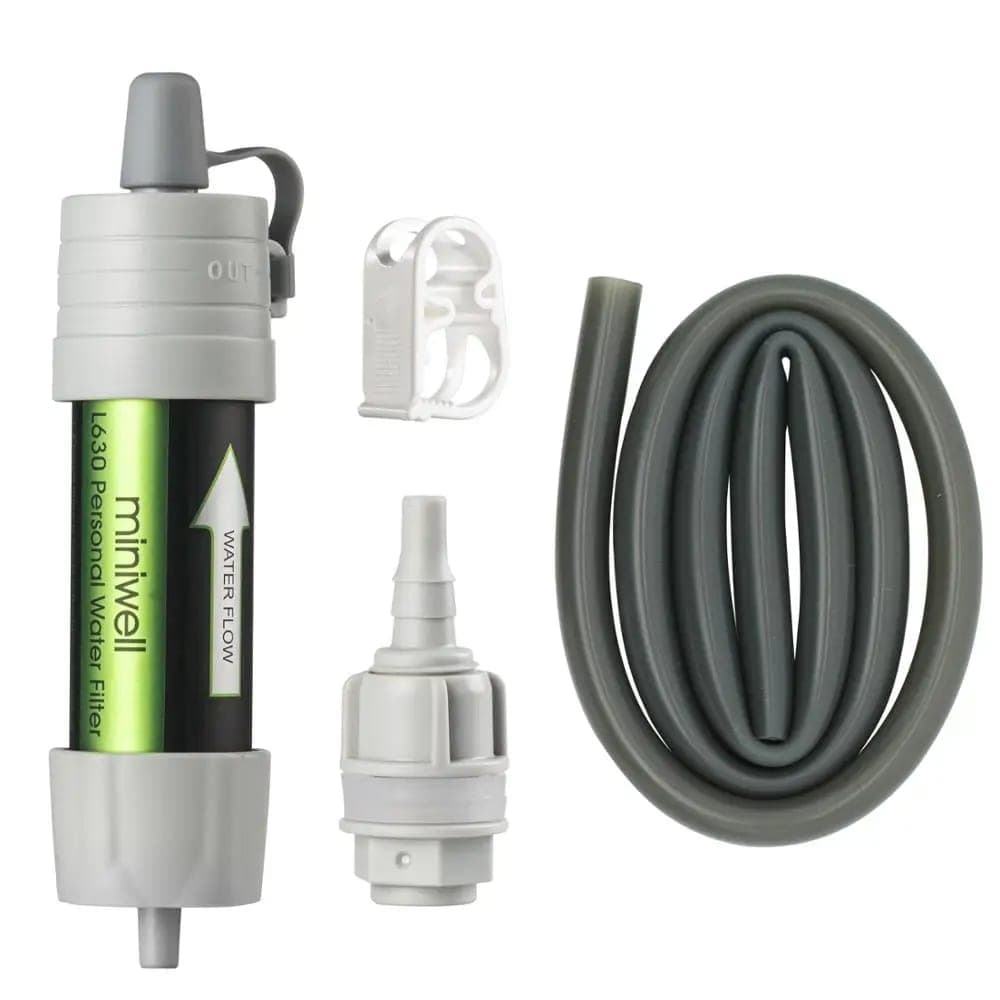
A palm-sized ultrafiltration straw that also turns into a bottle, bucket or gravity filter.
Made by Miniwell (model L630 kit (gray L630H or tan L630)). Sold and supported by Tarnwell.
Personal Filter Straw · Gray
$68.95
Estimated delivery: Nov 30 – Dec 7 if ordered today
Ships from the USA. That is 4–9 business days including handling. Tracking is emailed when it ships. Shipping details
30-day returns on unused filters. Returns & refunds
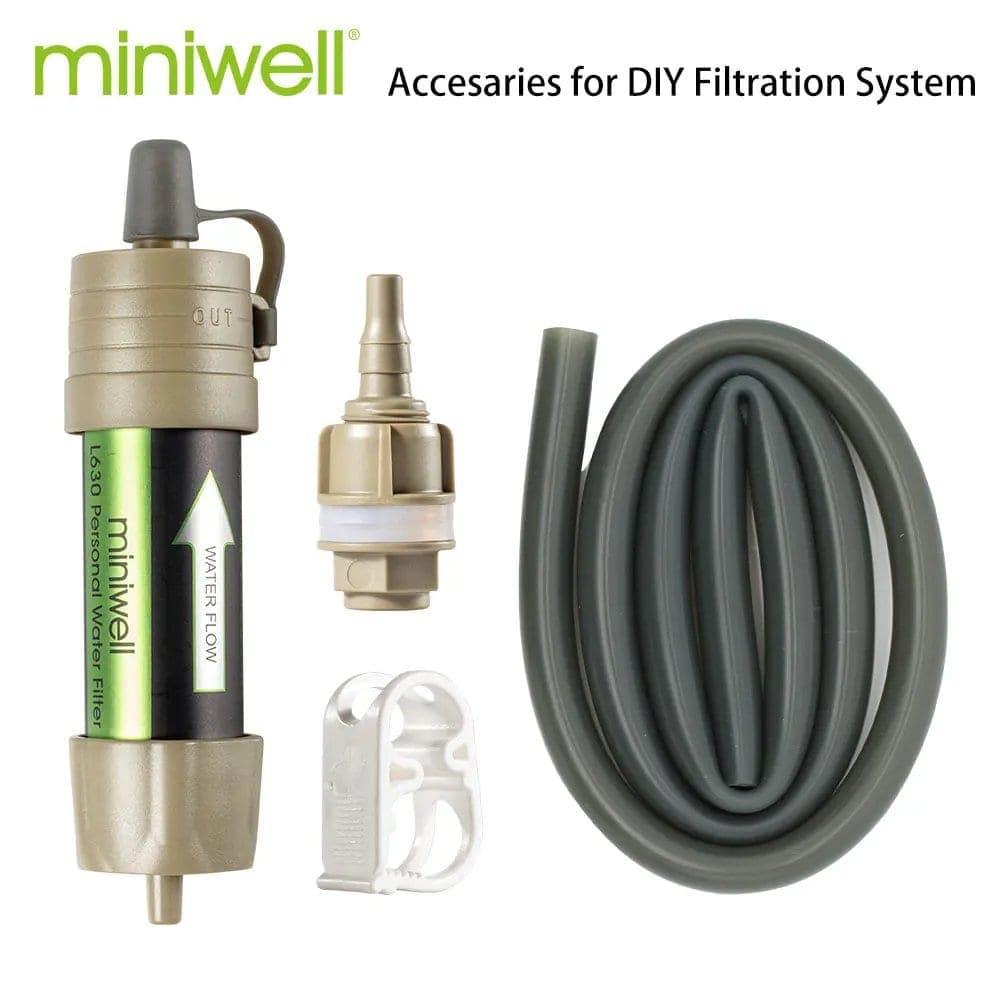
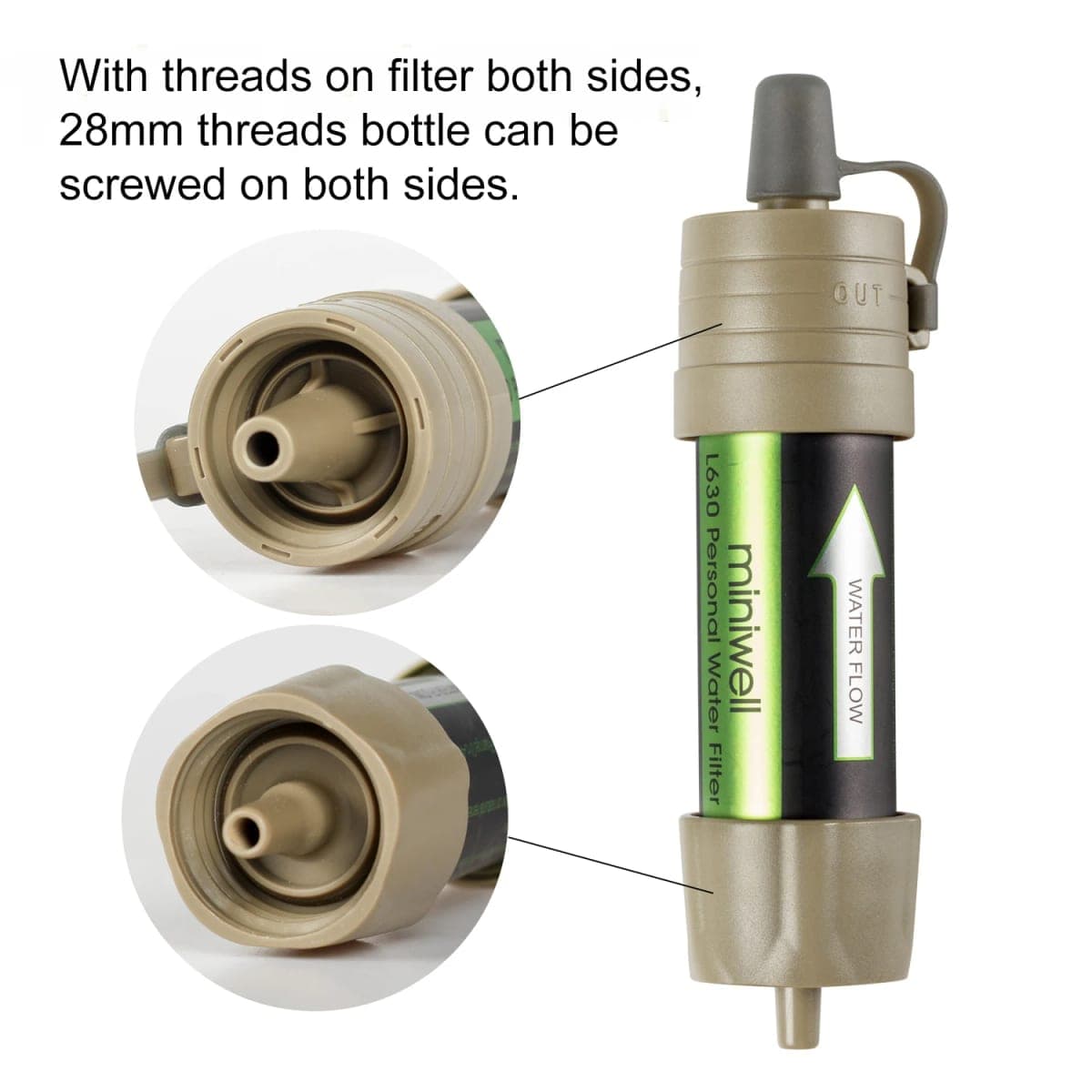
The Miniwell L630 is a pocket-sized filter with an ultrafiltration membrane inside. Drink straight from a stream or lake like a straw, or screw it onto a standard 28 mm soda bottle and squeeze. Each one comes with a length of hose, a bucket/bottle adapter and a hose clip, so you can also run it as a gravity filter from a bucket. Both ends are threaded, so you backflush it with an ordinary bottle of clean water instead of a syringe. Choose gray or tan; the filter inside is the same. Made by Miniwell and sold, shipped and supported by Tarnwell. We publish a specification or reduction figure only after we hold the supplier's test report or spec sheet for it.
Read before you use it
- This is a water filter, not a purifier.
- It does not remove viruses, dissolved chemicals, heavy metals, or salt. Do not use it with salt water.
- Always start with the clearest water available; pre-filter cloudy water through a cloth.
- Do not let the filter freeze once it has been used. Frozen membranes can crack without any visible sign; replace a filter you think has frozen.
- Replace the filter when it reaches its rated capacity, or sooner if flow stops recovering after backflushing.
Specifications
We only publish a figure once we hold the supplier's test report or spec sheet for it.
| Pore size | Not published yet: awaiting the supplier's documentation |
|---|---|
| Rated capacity | Not published yet: awaiting the supplier's documentation |
| Weight | Not published yet: awaiting the supplier's documentation |
| Flow rate | Not published yet: awaiting the supplier's documentation |
| Operating temperature | Not published yet: awaiting the supplier's documentation |
What it filters
Hollow-fiber membranes like this one are designed to catch sediment, bacteria and protozoa. We publish reduction figures only once the supplier's lab report is on file, and we don't have it yet for this product.
What it does not filter
- Viruses
- Dissolved chemicals such as pesticides, fuel or industrial runoff
- Heavy metals such as lead or arsenic
- Salt — never use it with sea water or brackish water
- Dissolved minerals, and most taste, odor and color
For water that may carry viruses, such as near human or livestock waste, also disinfect it: boil it, or use a chemical treatment as its label directs. Filter vs. purifier explained
How to use it
- Remove both caps. Before first use, soak the filter in clean water for about a minute so the membrane wets out.
- As a straw: put the inlet end (the end without the mouthpiece) into the water, keep the mouthpiece clear of the source, and sip steadily. The first draws take more effort until the membrane is fully wet.
- On a bottle: fill a 28 mm-thread soda bottle from the source, screw the filter's inlet onto it, and squeeze or sip through the mouthpiece.
- As a gravity filter: fit the included adapter to a bucket, push the hose on, connect the filter so the arrow points toward your clean container, and use the clip to start and stop the flow.
- Choose the clearest water available. Let silty water settle, or pour it through a clean cloth, before you filter it.
Backflushing and maintenance
- Backflush whenever flow slows, and before storing it.
- Fill a clean 28 mm-thread bottle with already-filtered water, screw it onto the mouthpiece (outlet) end and squeeze it backwards through the filter. Never backflush with unfiltered water.
- Repeat until the water runs clear and sipping feels easy again.
- Don't use soap, bleach or boiling water on the membrane.
- Shake out excess water and let it air-dry with the caps off.
Storage
Unused filters keep best sealed in their original packaging in a cool, dry place away from direct sun. After use: backflush with clean filtered water, shake out as much water as you can, and let it air-dry with the caps off before storing. Keep a used filter from freezing — in cold weather carry it in an inside pocket by day and keep it in your sleeping bag at night.
When to replace it
Replace it when it reaches its rated capacity, when flow no longer recovers after backflushing, if it may have frozen after first use, or if the housing is cracked. The membrane and housing are mixed plastics that curbside recycling usually won't take; check your local rules, otherwise dispose of it with household trash.
Reviews
No reviews yet. Reviews here come only from verified buyers: after delivery we email each customer a link to review what they bought.