Compact Gravity Kit
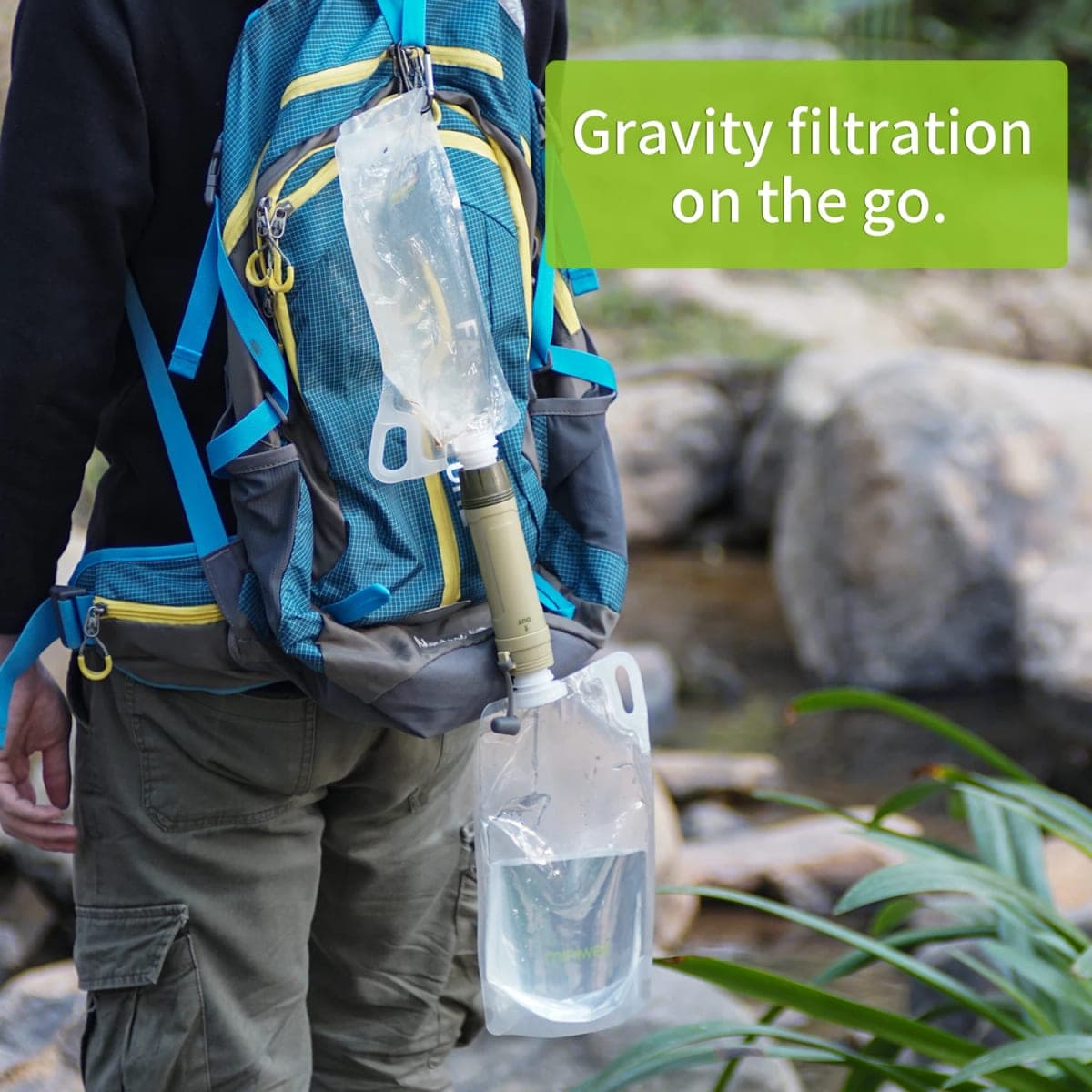
The L605 filter with 3-liter dirty and clean bags for hands-free filtering.
Made by Miniwell (model L605G). Sold and supported by Tarnwell.
Compact Gravity Kit
$87.95
Estimated delivery: Nov 30 – Dec 7 if ordered today
Ships from the USA. That is 4–9 business days including handling. Tracking is emailed when it ships. Shipping details
30-day returns on unused filters. Returns & refunds
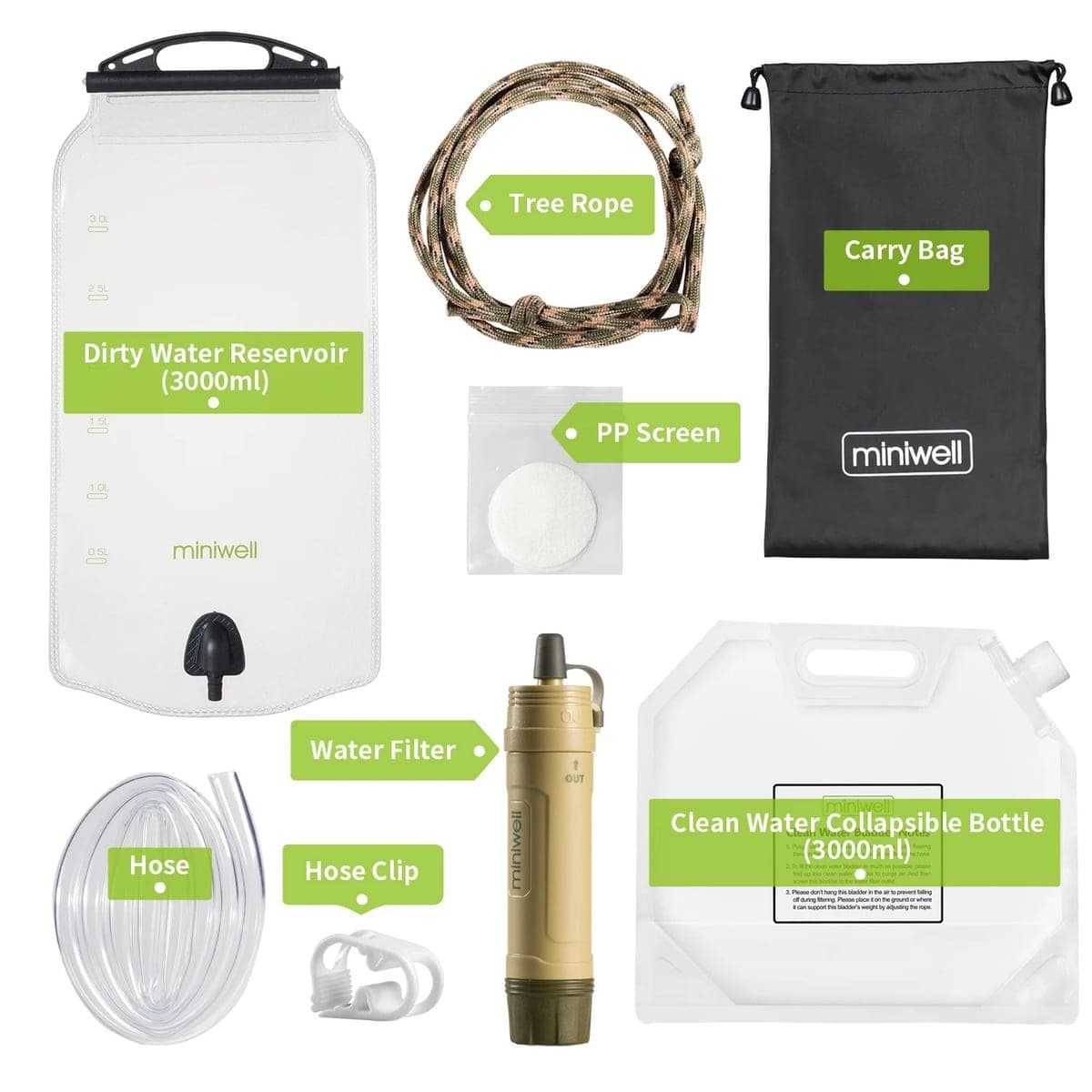
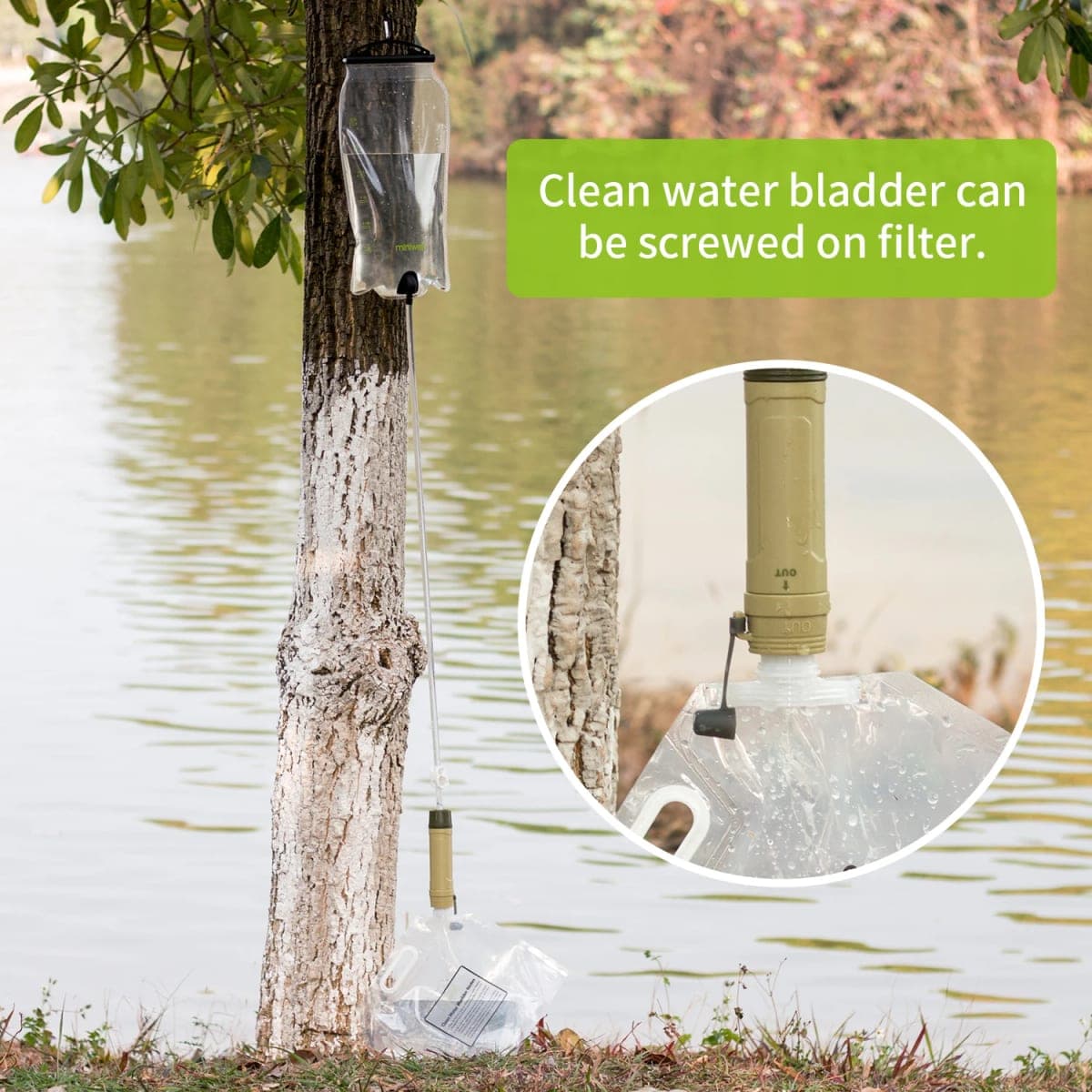
The Compact Filter with Carbon Stage, packaged as a gravity set. Fill the 3-liter dirty-water reservoir, hang it with the included tree rope, and water runs through the hose and the L605 filter into the 3-liter clean-water bottle. A spare pre-screen, a hose clip and a drawstring carry bag are included, and the filter still works on its own as a straw or on a 28 mm bottle. We publish a specification or reduction figure only after we hold the supplier's test report or spec sheet for it.
Read before you use it
- This is a water filter, not a purifier.
- It does not remove viruses, dissolved chemicals, heavy metals, or salt. Do not use it with salt water.
- Always start with the clearest water available; pre-filter cloudy water through a cloth.
- Do not let the filter freeze once it has been used. Frozen membranes can crack without any visible sign; replace a filter you think has frozen.
- Replace the filter when it reaches its rated capacity, or sooner if flow stops recovering after backflushing.
Specifications
We only publish a figure once we hold the supplier's test report or spec sheet for it.
| Pore size | Not published yet: awaiting the supplier's documentation |
|---|---|
| Rated capacity | Not published yet: awaiting the supplier's documentation |
| Weight | Not published yet: awaiting the supplier's documentation |
| Flow rate | Not published yet: awaiting the supplier's documentation |
| Operating temperature | Not published yet: awaiting the supplier's documentation |
What it filters
Hollow-fiber membranes like this one are designed to catch sediment, bacteria and protozoa. We publish reduction figures only once the supplier's lab report is on file, and we don't have it yet for this product.
What it does not filter
- Viruses
- Dissolved chemicals such as pesticides, fuel or industrial runoff — don't rely on it for these
- Heavy metals such as lead or arsenic
- Salt — never use it with sea water or brackish water
For water that may carry viruses, such as near human or livestock waste, also disinfect it: boil it, or use a chemical treatment as its label directs. Filter vs. purifier explained
How to use it
- Before first use, soak the filter in clean water for about a minute so the membrane wets out.
- Fill the dirty-water reservoir from the clearest part of the source, close its slide-seal top and hang it with the tree rope. Don't let drips from the reservoir reach your clean bottle.
- Let a little raw water run through the hose to push out the air, then connect the filter so water flows in at the inlet and out at the mouthpiece end.
- Fold the clean-water bottle flat to push the air out, screw it onto the filter's outlet and set it on the ground below rather than hanging it.
- Open the hose clip to start the flow and close it when the bottle is full.
Backflushing and maintenance
- Backflush the filter whenever flow slows: screw a bottle of already-filtered water onto the outlet end and squeeze it backwards through the filter. Never backflush with unfiltered water.
- Rinse the pre-screen, and swap in the spare when it stays dirty.
- Keep the dirty-water reservoir and hose apart from the clean bottle and the filter's outlet end.
- Rinse both bags after each trip and replace a bag that leaks.
Storage
Empty both bags, rinse them and let them air-dry fully, open, before packing them away so they don't grow mildew. Store the filter as described for the filter itself: backflushed, drained and dry, out of direct sun, and never where it can freeze.
When to replace it
Replace it when it reaches its rated capacity, when flow no longer recovers after backflushing, if it may have frozen after first use, or if the housing is cracked. The membrane and housing are mixed plastics that curbside recycling usually won't take; check your local rules, otherwise dispose of it with household trash.
Reviews
No reviews yet. Reviews here come only from verified buyers: after delivery we email each customer a link to review what they bought.